
"Of all the forms of inequality, injustice in health is the most shocking and the most inhuman."
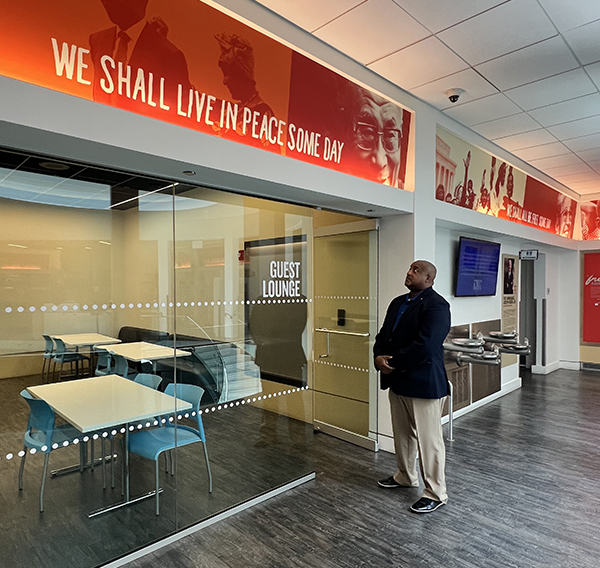
The legacy of the Rev. Dr. Martin Luther King, Jr., is not easily summarized. Dr. King’s advocacy and community outreach in the fields of human rights, anti-racism, and non-violent social change defined the Civil Rights Movement. His philosophy resonates just as profoundly today across the United States of America and around the world more than 55 years after his assassination. Dr. King’s work also continues to inspire the APA Foundation’s (APAF) efforts to connect marginalized and under-resourced groups to the affordable, quality mental health care services they deserve. These efforts include APAF’s 50+ year old Fellowship Program, a leadership and professional development program for psychiatry resident-trainees (including the Jeanne Spurlock, M.D. Congressional Fellowship); the Awards for Advancing Minority Mental Health; the Chester M. Pierce, M.D. Human Rights Award & Lecture; the Moore Equity in Mental Health Community Grants program; the Solomon Carter Fuller, M.D. Award & Lecture; the Helping Hands Grants program; and the new Serious Mental Illness (SMI) services and support grant from Mother Cabrini Health Foundation.
You likely know that people of color face a higher probability of struggling with mental health conditions compared to their white peers due to socioeconomic factors, cultural barriers, and the widespread existence of "health care deserts" in more than 80% of counties across this country. What is less commonly known is that Dr. King struggled with his own mental health issues, including an apparent suicide attempt after the death of his grandmother. He also suffered bouts of severe depression during his adult life. In 1959, Dr. King wrote: “What I have been doing is giving, giving, giving, and not stopping to retreat and meditate like I should—to come back. If the situation is not changed, I will be a physical and psychological wreck. I have to reorganize my personality and reorient my life. I have been too long in the crowd, too long in the forest."
"We are called to do more than merely honor Dr. King’s life and legacy. We must practice his legacy by strengthening his ideal of a 'beloved community', including his commitment to mindfulness and mental health," said Rawle Andrews, Jr., Esq., the Executive Director of the APA Foundation. "On this day of reflection, let us all 'retreat and meditate' so that we can continue the challenging but necessary work of building a future more equitable than our present. Mental health is shaped by our socioeconomic circumstances as well as our DNA, and like the Rev. Dr. King, we at the APA Foundation strive to help others by holding life’s ladder steady where our neighbors in need live, learn, work, worship, and play."