
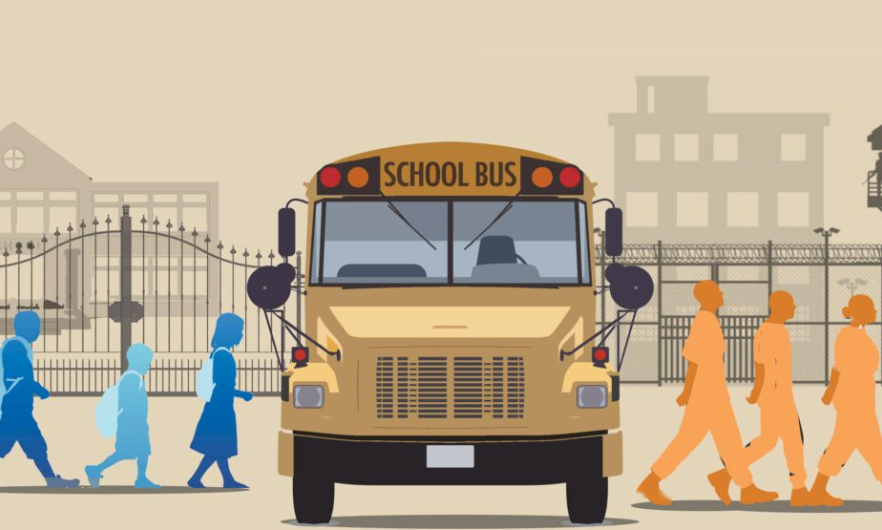
The pathways into the justice system are shaped long before any arrest. It begins in childhood: a growing body of research supports that justice-involved individuals experience adverse childhood experiences, including abuse, neglect, and household dysfunction, at rates far higher than the general population [1]. What the research describes in aggregate, individual lives reveal in detail. We share the stories of three individuals who came of age in different regions and decades but whose lives are united by common themes. When institutions fail in their duty to recognize and respond to children in crisis, unmet needs become entry into the justice system.
This first post of three focuses on the backgrounds of three individuals prior to any involvement in the justice system. The subsequent posts will highlight their experiences in carceral settings as well as their eventual reintegration into society following release.
Rooted in the Brown v. Board of Education Era
Interviewer: Could you tell me about yourself, where you're from, and how you grew up.
Mr. Jefferson: It's almost like the first two kind of merge at a certain point in a young Black man's life growing up on federal land. It's almost like you're involved in the justice system just because of the structural impediments of society, which I didn't understand as a young man.
Mr. Jefferson: A few things about myself. I'm 76 years old, and blessed to have lived this long through so much turmoil. So I was raised on federal land. I started school about a year after Brown v. Board of Education. Elementary school was my first memory of a racial attack; I didn't learn about the difference in skin colors at home. I didn't learn that until school. I didn't understand about being at the back of the line. I came up during the tail end of the Jim Crow era. I didn't understand the "white" and "colored" signs and all of that, but as I grew up later, it all fell into place.
Mr. Jefferson: My mother and her sister had come into some family money. Like most Black families, everybody wants the same thing: a nice home, a good job, take care of the bills, raise their kids, send them to school, and live the American dream.
Mr. Jefferson: When my mother bought the home, I was raised in in the largest section of our hometown; she chose it because it was within walking distance of the elementary school, the junior high, and an excellent high school.
Interviewer: It sounds like she was really prioritizing you and your siblings getting to school.
Mr. Jefferson: Yeah, She had to work hard, sometimes two jobs, just to keep the mortgage, keep the roof over our heads, and put food on the table. And the better schools at that time were in the white areas.
Mr. Jefferson: We were the first or second Black family on our street. So I'm a kid coming up mainly around a lot of white families. But it was changing fast, rapidly. The neighborhood became virtually all Black within a matter of maybe two or three years.
Interviewer: That's part of white flight, people leaving the urban core and going out to the suburbs.
Mr. Jefferson: White folks didn't want to really be around Black folks. Terrible, man. I didn't understand it as a kid.
Mr. Jefferson: So I'm starting school, standing in the line, and the guys ran me home from school. My grandmother and them had to explain, and they had to have a conversation with me that I didn't understand at five or six years old.
Mr. Jefferson: But I was blessed to go to one of the premier camps for summer: Camp Atwater in Springfield, Massachusetts. If you study the history of Camp Atwater, you'll see that some of the most notable Black politicians and figures went there. I didn't know it at the time, but it was a childhood dream: boating, fishing, canoeing, archery. My parents exposed me to that. I guess it took a lot of money and saving to get a child there.
Mr. Jefferson: I did pretty good and stayed out of trouble until probably around 14 or 15. That was a critical year, because we're moving from the 50s into the 60s.
Mr. Jefferson: That was the time of social upheaval in this country and in the world. This was the time of the flower children, Vietnam, Dr. King, Muhammad Ali. That's the era I was raised in, the 1960s. Never seen anything like it before in this country. Total social upheaval. Black folks and young white folks that were also rebellious against society, especially the war.
Mr. Jefferson: At that time, my mom and my stepfather, well, my sister came along, and then there was a divorce. So you got a mother with two children, a single family raised alone. As a man, I look back trying to analyze my own life, laying up in prison, thinking: how in the world did I end up here? Where did I go wrong? What'd I do? I'm trying to understand my own life, questioning myself.
Mr. Jefferson: The only thing I can come up with is I took to the streets to seek my male identity, my manhood, because I was raised in a home with my mother, my grandmother, her sister (my grand-aunt), and my sister. That's four women. The guys in the street were who I gravitated toward to learn how to be a man. I got introduced to making faster money: stealing. My story is textbook sociology of escalating criminal behavior, from the teen years through adulthood, all the way from probation to life sentences without the possibility of parole. It's a blessing that I'm able to sit here today and engage in a conversation of this nature.
Shaped by the War on Drugs
Skip: I want to say I grew up very mundane. Mom and Dad were both city workers — owned our house, 2-car family, front yard, backyard. That's a misconception a lot of people seem to have when you are impacted by the criminal justice system. People always seem to think you came up rough, you lived in a marginalized area, there was dysfunction, certain things were happening that led you into the system. That was not the case with me.
Interviewer: What was it like growing up?
Skip: I'm adopted. I did not have that story of running through the foster care system, going from family to family. The parents who took me home from the hospital after I was born were the same parents that eventually adopted me when I was 8.
Skip: Growing up as a kid who's very precocious, I'm growing up with a dad I love to death. I was his baby. I followed behind him. And my dad followed me and allowed me to do everything.
Skip: I'm a voracious reader. Test scores out the roof as far as reading. My dad worked in transit and anytime he found books left on the train, he would bring them home. I devoured them.
Skip: When I started elementary school, it was on the rough side. I remember they used to take my kindergarten class to the library down the street. And while all the kids were sitting around doing story time, I was busy exploring. One day the teacher got curious about what I was doing. I had found a set of encyclopedias that I just wanted to get into. And no, they were not children's encyclopedias. The teacher was kind of telling my mom about this like this was something I shouldn't be doing. And my mom was like, “Why shouldn't she be in a corner reading? Oh, because you think a little Black girl from this side of town shouldn't have intelligence?” You know, this is the way my mom approached people, and I never forgot that.
Skip: Because I was very precocious, very intelligent, a lot of things didn't work for me in school. And I acted out.
Skip: So, when I was transferred to another school, it was an all-White neighborhood. My mom sent me to a public school that fed into the same junior high my sister went to.
Skip: But I had a really hard time, and I was labeled a behavioral problem. My teacher used to call my mom. And my mom said, “You're telling me all the havoc she's creating, the chaos she's creating. But you didn't tell me about her test scores and her schoolwork”. And the teacher said, “Well, to be honest, I would be okay if she sat in the back of the class and read comic books, as long as she didn't disrupt the class. Because when I call her for an answer, she has the right answer”. By the time I got into like the 4th grade, I was reading at the 12th grade level, and the tests didn’t go higher than that. And that was the first time I was actually sent to a child psychologist.
Interviewer: At what age?
Skip: I was about 8. It was a lot of stress. I started having bad nosebleeds and there was no physical answer. It was just really the stress of being stifled, being told that I'm bad. Acting out, because this is the label you gave me, now I’m going to give you what you want. I'm in a school where literally you have honors classes, and I'm the only Black person sitting in the honors classes, and I still know everything.
Skip: I should have been in a gifted school. But my mom in all her infinite wisdom didn't want me to be skipped. I had a chance to go to a gifted school. And while she claimed she forgot to sign the application, I think she just didn't want it, the additional stress put on me. And this even went so far as when I graduated from junior high school and took all of the specialized tests. I was going to Brooklyn Tech. Because I still wanted to be a doctor. I still wanted to be a scientist.
Skip: My mom said, “Even if you don't go to school, you at least need to get your GED”. So, at 15, I went and got my GED.
Skip: And then my sister went to an HBCU, and I got tired of hearing my mom talking about, “Oh, my daughter in the HBCU.” I signed myself into community college. So, I actually got into college before my high school graduating class. I was always hanging with older people, and that’s when I got into drugs and things like that, at that young age, like 17 or 18. My mental health was still in question. I was still supposed to be seeing a psychiatrist or a therapist, and I stopped.
Skip: I was never put on meds as a child. I wasn't put on meds until I actually got impacted by the criminal justice system. In the meantime, as a practicing drug addict – when I was feeling my worst, I would “street-medicate.”
Interviewer: It sounds like your mom and dad were big influences. Were there any other notable trusted adults in your life growing up?
Skip: Not coming up, we were a close-knit family. I want to reflect on the fact that I lived on a close-knit block. You could definitely say my neighborhood helped raise me.
Interviewer: Did you find overall that your schools were supportive of your needs?
Skip: No, and I didn't even know what my needs were at the time. I just knew that you wasn't holding my attention, and I was considered an anomaly.
Interviewer: They didn't have a template for someone like you.
Skip: No, I broke the mold. Every time I turned around, I broke the mold, definitely.
Interviewer: Were there any local care or treatment services that you accessed prior to getting involved in the justice system?
Skip: No. Other than the time when I was going to the child psychologist who I had wrapped around my little finger. She always took me to the store, and I was into building models, and she bought me a model. Right next to the store was Baskin Robbins, where I would sit and ruminate over what flavor of ice cream I wanted. And then by the time we got back into the office, we maybe had a chance for a 10-minute conversation. I talked about surface stuff and just looked forward to the next week when I saw you and you buy me another model and some more ice cream. I stopped going when high school started. I never saw anybody else until I was already impacted by the justice system and realized I had some issues.
Lessons from the Modern Era
Mrs. Poe: I am from the Southeast, born and raised. I'm still here. I haven't gone far.
Interviewer: What were things like for you when you were growing up?
Mrs. Poe: We lived in a very bad area. A lot of police and it was just a bad area.
Mrs. Poe: I have 11 brothers and sisters. I was number 10, the youngest girl. Not all my siblings lived in the house; a couple had moved away. But we're all very close. My siblings are amazing, but I lived in an abusive house. My dad was abusive. He was sexually abusive. It was a secret. No one knew. He was also domestically abusive.
Interviewer: Were mom and dad both in the home?
Mrs. Poe: Yes, mom was there but she worked a lot. My dad also worked, but my dad was the boss. So, growing up, we all worked. We were migrant workers over the summer and would travel several states west. We worked picking oranges, laying sod, and cotton fields. Anything that you can pick from the ground or from a tree, we would do. I've been working since I could talk.
Interviewer: How many months out of the summer were you there?
Mrs. Poe: About 3 months. It was a whole summer.
Interviewer: Did that impact school for you at all?
Mrs. Poe: No, but I was not a good student. So, whether it impacted me, I don't know, because I was never really a good student in school.
Interviewer: Did you go to school regularly?
Mrs. Poe: I did. Elementary school was good, I went to school, but CPS was involved in middle school because my dad ended up getting arrested. They ended up finding out what he was doing, and he got arrested. And ultimately went to prison for what he did.
Source: National Health Care for the Homeless Council
Interviewer: Were your siblings also involved in the abuse, or was it only directed towards you?
Mrs. Poe: At the time, I thought it was only me. But it was everyone else too.
Interviewer: Did any of the siblings talk about it, or what they were experiencing?
Mrs. Poe: My sister tried talking to me about it when I was in 3rd grade but I lied to her about it. Because, my dad would always tell me after he was done that if I say anything, then, he would torture my family in front of me. I had nightmares of that. So, I never said anything. I didn't understand what was going on either. So, when anybody would ask me, I would say nothing happened. Had I said something, he would have been in prison longer, because I was the youngest. But I didn't because I was scared.
Interviewer: That sounds exceptionally difficult to carry on your own at such a young age.
Mrs. Poe: Yeah, yeah.
Interviewer: After dad went to prison, did life at home change?
Mrs. Poe: Yeah, I was skipping school, started drinking. I started smoking weed. I was stealing cars. Sleeping around. I fought a lot. I was always fighting.
Interviewer: Was school supportive of your needs?
Mrs. Poe: Elementary school, yes, and middle school, yes. There was this one mentor, I'll never forget her. I'm actually still friends with her, she still checks up on me. She was my mentor in middle school, and she was the first person that I ever told about what my dad did, which helped me out a lot. And she would come visit me every week. She tried to get me on track, but I just wanted to live my life.
Interviewer: Was this mentor a part of a school program?
Mrs. Poe: Yes, she was. Now that I think about it, there was another person who knew what my dad did. It was the first guy that I was intimate with. I felt like I had to tell him, because then he would know that I wasn't a virgin. Then after that, we were in class and we were watching a movie called Ursula Sunshine Assad. I'll never forget it. He looked over at me and he was like, “Is that how you were treated? Is that what happened to you?” And started laughing. And then that's when I went to the office. And then I told the office I didn't want to share what was going on, and that's when they brought in a woman named Donna, to help me. And she sat with me and I was able to open up to her. And I can tell you the officer who was in school at that time stuck up for me too. He was just so good to me.
Interviewer: I'm glad that you had those resources and people you could trust at that stage in your life. Were there any other trusted adults in your life at that time?
Mrs. Poe: No, not really. Even though I had so many brothers and sisters, I couldn't tell them.
Mrs. Poe: And then, on top of that, I found out that my dad had other women, and so… without me knowing, I was going to school with my siblings. So I have more half-siblings in addition to the 11 full siblings mentioned before. It was pretty bad.
Interviewer: Were there any local crisis care services or treatment services that you accessed prior to your involvement with the justice system?
Mrs. Poe: I was going to a therapist, at a young age, that, to me, didn't work. I lied. I didn't want to tell them the truth because I didn't trust them. The therapist was a male, and I wasn't going to tell a male what I was going through. My mom would make me go every week. We tried for a couple months.
Mrs. Poe: My mom was sitting there with me too, and I didn't want to tell her, so I kind of lied through that. Also, looking back on all of it is… yes, I lied, but I think I was just in protective mode because I still… I really thought that my dad was gonna hurt my family.
Mr. Jefferson grew up in a household of four women and went looking for male role models in a neighborhood reshaping itself around White flight and the upheaval of the 1960s. Skip was reading at a twelfth-grade level by fourth grade, and her schools called her a behavioral problem. Mrs. Poe was abused and didn't feel safe enough to tell anyone, even when a therapist was sitting right in front of her. The needs that went unrecognized in childhood lead each of them into the justice system. In the next post, we follow them in their journey in the carceral system.
The APA Foundation’s mission is to create a mentally healthy nation for all – where we live, learn, work, worship, and play. To learn more and become involved in the APA Foundation’s Justice branch of work, visit the Judges and Psychiatrists Leadership Initiative homepage. To support the early identification of ACEs and change outcomes for individuals like Mr. Jefferson, Skip, and Mrs. Poe, you can make a gift to the Foundation by texting APAF2026 to #44321.
References
- Baglivio, Michael & Epps, Nathan & Swartz, K. & Sayedul Huq, Mona & Sheer, A. & Hardt, NS. (2014). The prevalence of Adverse Childhood Experiences (ACE) in the lives of juvenile offenders. Journal of Juvenile Justice. 3. 1-23.